




Invisible Factory
' The Vanished Gods: From Maeklong to Hantangang '
A contemporary art exhibition, Pocheon Banwol Art Hall, by 808 Factory Pocheon, South Korea
fertilizer sacks, embroidery (56 x 78 cm), video (4.40 minutes), sound, monitor, variable of different Thai and Korean clay jars, ceramic piece, homemade sato, cocktail station, string- less bee honey
Invisible Factory explores the unseen entanglements of human and non-human labour within the landscape of the Mae Klong River region. Beginning with field observation in a coconut plantation, Ratchaburi, Thailand. The project reflects on how invisible workers quietly sustain ecologies and economies while rarely being acknowledged as collaborators. Through taste, dialogue, and fermentation, the work invites audiences to consider how hidden forms of labour shape our experience of place.
The project originated in the coconut plantation, where I encountered pollination workers (stingless bees) whose labour helps sustain the community’s livelihood. This encounter inspired the 35 Days of Working, a video work imagining a conversation with the worker’s life, labour, and the quiet cycles of care that underpin the plantation’s survival, whose contributions often go unrecorded.
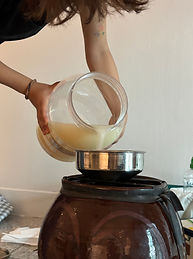
This inquiry into overlooked materials and invisible economies led me to fermentation as a transformative process connecting cultures and the geographically unconnected between Mae Klong and Hantan Rivers. Inspired by the history of Makgeolli, Korea’s traditional labour drink, I brewed Sato, a Thai rice wine made with ingredients sourced from unseen labourers. Offering the Scent of Invisible Factory, that is actively fermenting drink in stacked earthen jars, vessels common to both Ratchaburi and Pocheon (Please find the artist to experience a taste of the hidden brewery.)
This collaboration invites visitors to activate the space by interacting with the jars and allows distant landscapes to resonate through shared practices of sustenance. By weaving these sensory experiences together, it opens a space to question what it means to collaborate across human and non-human realms, and how such entanglements might offer new ways of tasting, sensing, or reimagining our ecosystems together.


